
Yoga: a cyclical love story
Early in childhood we learn to progress from haphazard scribbles to coloring within the lines. It’s an important step in learning coordination and control; and it’s an important step in the cycle of learning to trust. Eventually, we find a balance between neat effort and the freedom to play with color and our strokes. As we progress, we begin to leave the pre-determined edges again; a stage that is not messy per-se, instead a flow… full of grace.
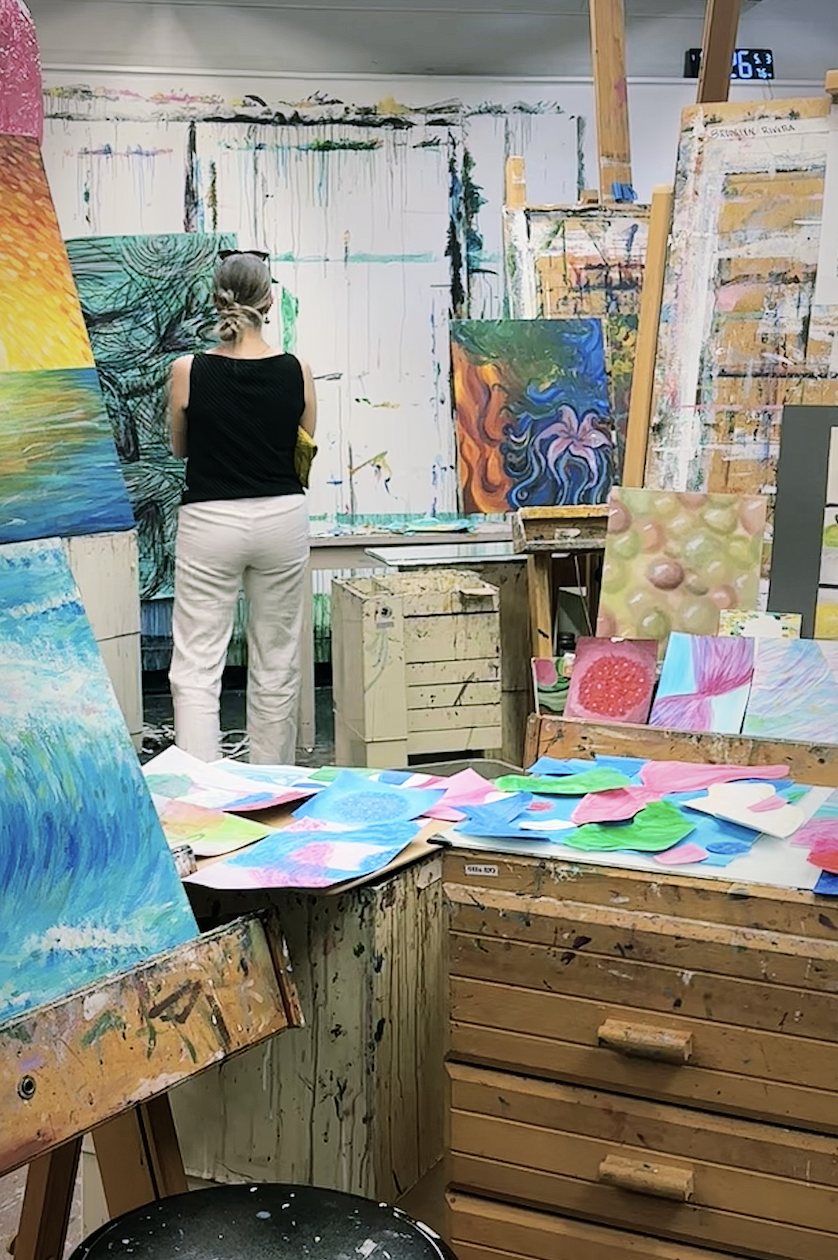
Megan Twining at Olin Hall Studios, Roanoke College
Six months ago I joined a History of Yoga Course and it reframed for me the importance of coloring within the lines: how to revere the structure of Yoga, how the right teacher can measure the proper dose in just the right time, and how to receive the responsibility to continue the cycle humbly.
Yoga is a cyclical love story. Devoted teachers allow the student to experience the twists and turns necessary for transformation until they finally settle into trusting themselves with joy.
The thread of Yoga and traditional cultural values has been pulled through by people and perseverance. I’m inspired by those who sat at the feet of their elders, teachers, and Gurus for decades before they made their mark on Yoga as we know it. The faithful charge of personally passing Yogic wisdom in an uncomplicated way is not only special, it’s sacred. In this essay, I offer a mere peek into the course content and how it knocked on my heart to reconsider what I know about Yoga and how I am sharing it in my own studio.
I learned about Gorakshanath’s intense love for his Guru, Matsyendranath, in the 9th-10th century [more on these two Yogis in a future essay]; and about the progressive and multi-faceted work of the mid 19th century King of Aundh, Bhawanrao Pant Pratinidhi, his decades long sādhanā of Surya Namaskar, and the inclusion of art as an expressive storyteller [more on Pant in my Sun Salutation class this coming Saturday]. More currently, I was moved to learn about a champion of Yoga today, Prasad Rangnekar: how he was swaddled in the sound of his mother’s Hatha lullabies as a baby, how Indian epics inspired kitchen debates with his sisters and how this led to critical thinking at a young age, the invitation to join his father in the wrestling and body building gym, and then finally his travels north to learn from his own Guru [follow Prasad on Instagram].
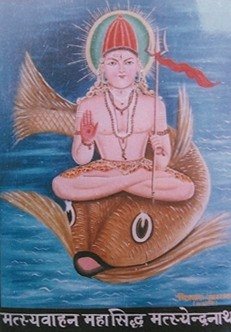
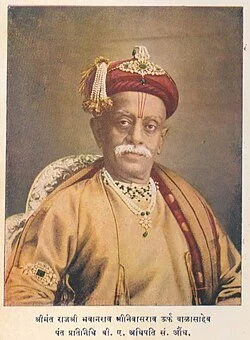
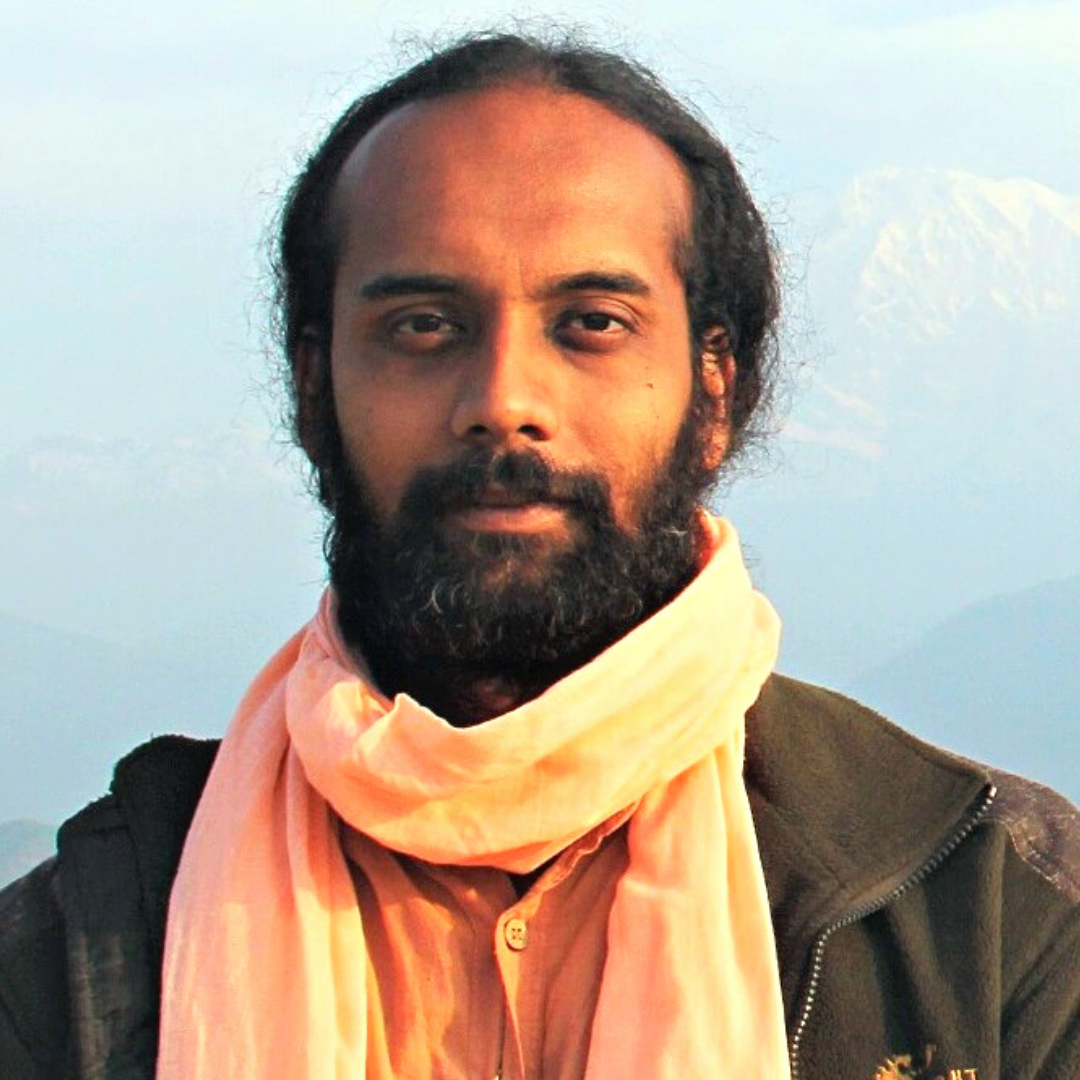
I do not own the rights to these photos, they are respectfully borrowed from the following websites L-R:
www.mydattatreya.com/matsyendranath/, www.aundh.info/balasaheb.php, www.prasadrangnekar.com
While it is true that many cultures are steeped in traditions that are still passed down in extraordinary ways, Yoga alone has been preyed upon, picked apart, modulated and monetized. Some may argue that the promise of India’s ancient wisdom has been snatched, labeled ‘mysterious’, and woven into a modern obsession of self-care. Ironically, in an effort to calm down, escape our inner confusion, and make it through this modern world, Yoga has been fashioned into a flashy fix rather than upheld as a patient unfolding.
Today, in most Yoga studios across America, we currently crown ourselves with certifications in 200 hours by zipping through the required content. Yoga teacher trainings are a tumbleweed of information– tailored to whatever registrants are willing to pay for. Students are promised that they will learn to teach asana, guide meditation, have a basic understanding of prana, chakras, and karma. To demonstrate the notion that modern Yoga offers more than the physical health benefits, Yoga teacher trainings dip their toe into spirituality by reading the Bhagavad Gita, familiarize their patrons with Patanjali’s 8 Limbs, and articulate that the goal of Yoga is complete mind dominance. It is not unusual to find the only Yoga history that is mentioned is that Śrī Tirumalai Krishnamacharya is the father of modern Yoga. Born in 1888 and living to be over 100 years old, western students brazenly assume that he is “one of us”. He’s not.
Krishnamacharya was immersed in Yoga throughout his life and persevered to become the master he is now remembered to be. Most teacher trainings gloss over Krishnamacharya’s upbringing, eliminating details about his studies in logic, Sanskrit, and grammar. There is no mention that: “in 1916 he went to the Himalayas where, at the foot of Mount Kailash, he met his teacher, Śrī Ramamohan Brahmachari.” Or that, “he then returned to the South to study Ayurveda, the traditional Indian healing system, and philosophy and logic that cultivates inquiry and discrimination gained by valid knowledge”.1 Rather it is taught that Krishnamacharya paired movement and breath to help people manage their health and their minds. This conveniently fits the marketing narrative in America and thus Yoga teacher trainings sell out.
Śrī Aurobindo, the philosopher turned revolutionary turned spiritual leader is quoted as saying, “But the function of India is to supply the world with a perennial source of light and renovation.”
As a Yoga teacher and studio owner, this truly gives me pause.
In these past several months I’ve reflected on my scribble-scrabble mode of sharing a misappropriated version of Yoga. This is where understanding the depth of Yoga’s history is important. Here is where I can hear the love in the voice of my teacher, “sit with this”. What a perfect example of where a patient teacher must meet a student.
So I have been sitting.
If you are part of the Sonder Studios community, this is why I’ve been more quiet than usual lately. I’ve been reflecting. It feels like the responsible thing to do. Yoga does not belong in the “quick fix” aisle of self-care that we have become obsessed with. I have come to recognize that the appeal of starting something transformative is not the same as being transformed. It takes time and repeating the story again and again. It takes some time coloring within the lines of discipline and devotion. It is a cycle and it is LOVE. I now see this in my students. I know this for myself.
Yoga is not just stretches and closing fitness rings on a device. Many of the teachers I know are detaching from the noise of consumerism as we collectively hear a call to action!
To quote T.K.V. Desikachar, “Yoga serves the individual, and does so through inviting transformation rather than by giving information.” In order for all of us to become the kind of teachers that can meet modern seekers where they are, we must return to our own sādhanā and study first.
So here is the call to action! Yoga teachers— leave the messy scribbles of your relationship with Yoga. Allow yourself to get swept into the cycle. Represent Yoga truthfully, historically, holistically, and under the guidance of your own teacher and mentor. Practice in the lines for a while. Don’t worry when the time is right, your teaching will become art… full of grace.
Resources
Aurobindo, 2011, The Complete Works of Sri Aurobindo: Letters on Himself and the Ashram, Vol. 35, Pondicherry: Sri Aurobindo, AshramPress.
Bhowmik, Sushmita, 2022, Regeneration of Values: A comparative study of the Thoughts of Mahatma Gandhi and Sri Aurobindo, New Delhi: Suryodaya Books.
Desikachar, T.K.V., 1995, The Heart of Yoga: Developing a Personal Practice, Vermont: Inner Traditions International.
Gogwekar, P., 2022, August 5, Raja of Aundh: The King Who Gave Away His Power, Live History India. www.livehistoryindia.com
Kelly, Matthew, 2025, The Seven Pillars of Catholic Spirituality, Florida: Blue Sparrow.
Pant, Apa, 1970, Surya Namaskārs: An Ancient Indian Exercise by Bhawanrao Pant Pratinidhi Raja of Aundh as explained to his son, 3rd edn, Hyderabad: Orient Blackwan Pvt. Ltd.
Tigunait, Rajmani, 2014, The Secret of the Yoga Sutra: Samadhi Pada, Pennsylvania: Himalayan Institute Press.
Desikachar, T.K.V., 1995, The Heart of Yoga: Developing a Personal Practice, Vermont: Inner Traditions International.